What Causes High Ping?
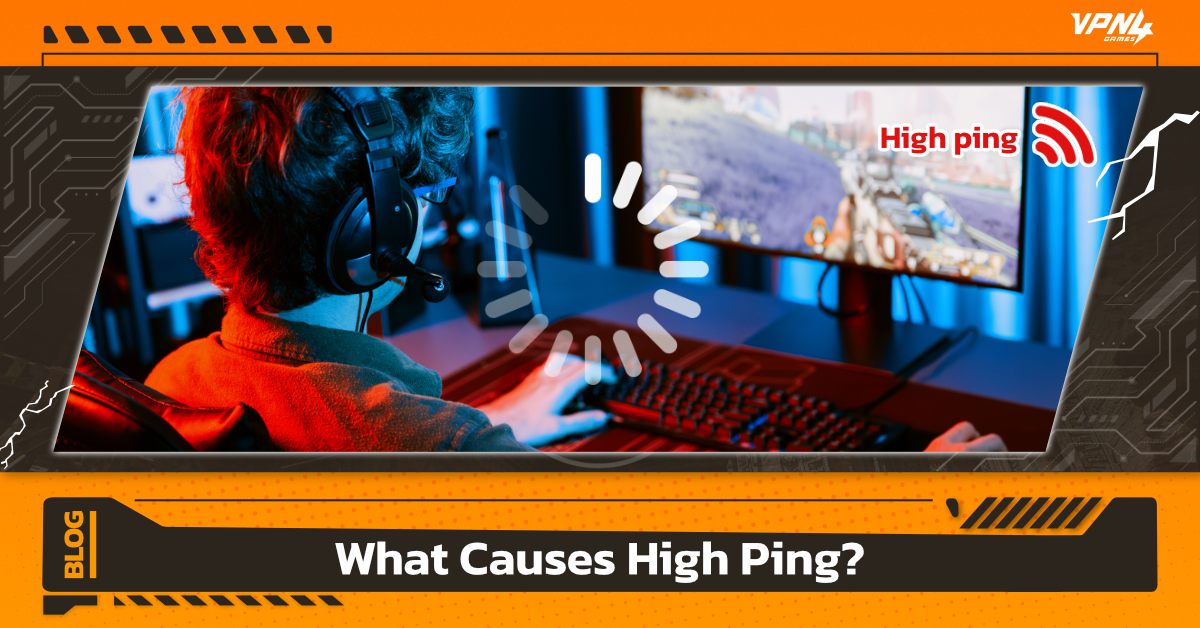
Ever had 500–1000 Mbps internet but your game still lags, your character teleports, and your shots don’t register even though download speed looks perfectly fine? In most cases, the problem isn’t your internet speed. It’s your ping, which measures network latency. When ping is high, even ultra-fast internet can’t prevent stuttering and in-game delay.
It’s clear that every type of online game, whether FPS games, MOBA, MMO, or Battle Royale, depends on something called ping as a core factor. When ping becomes unstable or spikes too high, the entire gaming experience can instantly fall apart. This article takes a deep dive into what causes high ping, how it impacts gameplay, and how to fix it effectively.
What Is Ping?
Ping is a value used to measure the time it takes for data to travel from your device to a server and back again. The lower the number, the faster the response. That’s why ping is especially important in online gaming, where real-time precision and instant reactions matter.
What Is Ping Measured In (What Is ms)?
Ping is a value that measures the response time between your device and the game server.
It is measured in milliseconds (ms), which is a very small unit of time.
One second equals 1,000 milliseconds.
How It Works
The system sends a small data signal from your device to the server and measures the time from when it is sent until a response is received. That total round-trip time is what we call ping.
What Is a Normal Ping?
- Below 20 ms = Excellent, competitive level, ideal for FPS games
- 20–50 ms = Normal, smooth online gameplay
- 50–100 ms = Slight delay may start to be noticeable
- 100–150 ms = Considered high ping, gameplay begins to feel delayed
- 200 ms and above = High risk of lag, rubberbanding, and shots not registering
For general activities like watching YouTube or browsing social media, a ping of 50–100 ms may not feel much different. However, for online gaming, especially FPS or MOBA titles, keeping your ping below 50 ms is ideal for the best performance.
Causes of High Ping
Server location is far away
Distance directly affects ping. If you play on overseas game servers, your ping is likely to increase immediately.
Using WiFi instead of a LAN cable
WiFi is more prone to interference from walls and other wireless signals, which can cause unstable connections and higher ping.
Multiple devices using the internet at the same time
Streaming in 4K, downloading large files, or attending online meetings simultaneously shares bandwidth and can increase ping.
Poor ISP routing quality
Sometimes data is sent through longer or inefficient routes, resulting in high ping even if you have a high-speed internet plan.
Old router or insufficient hardware performance
Hardware matters. If your router cannot process network traffic efficiently, high ping can occur without you realizing it.
High packet loss or jitter
Network instability can cause ping fluctuations, with sudden spikes that lead to noticeable lag during gameplay.
How Does High Ping Affect Your Gameplay?
When high ping occurs, the result is noticeable delay during gameplay between the actions you make and what actually happens in the game. The higher the ping, the slower the response time, directly impacting your overall gaming experience.
Shoot first, die first
In FPS games like Valorant, CS2, or Warzone, high ping means that even if you react first, your data reaches the server later. This results in getting eliminated despite firing earlier.
Skills feel delayed or do not register
In games like ROV, LoL, and other MOBA games titles that require millisecond-level precision, high ping causes abilities to activate slower than what you see on screen, leading to missed crucial fight moments.
Character teleporting or stuttering
Rubberbanding, snapping back while moving, or enemies appearing in incorrect positions happen when data fails to sync with the server in time due to high or unstable ping. This is especially noticeable in MMO or open-world games.
Disadvantage in ranked matches
In ranked or esports environments, even a 20 to 30 ms ping difference can impact accuracy, reaction time, and decision-making.
Voice delay during streaming or Discord calls
High ping does not only affect gameplay. It can also cause delayed voice communication, interruptions, or lag during live streams and voice chats.
How to Fix High Ping and Reduce Latency
Fix the root cause instead of simply upgrading your internet speed, because ping is affected by data routing paths, network stability, and the hardware you use. To effectively reduce ping, start by switching from WiFi to a wired LAN connection to minimize interference. Close background applications or devices consuming bandwidth, restart your router to refresh the connection, and select the game server closest to your location. In some cases, using a gaming VPN can help optimize routing and create a shorter, more stable connection path. Once these factors are properly managed, ping will decrease and your online gaming experience will become noticeably smoother.
- Read more in this article: How to Reduce Ping for Smooth Online Gaming
High Ping FAQ
Why is ping higher at night?
During nighttime hours, internet usage typically increases as more people go online. This leads to network congestion and higher ping, especially in shared environments like condominiums or dormitories where many users connect at the same time.
Can a VPN reduce ping?
If high ping is caused by inefficient or unstable routing, a gaming-optimized VPN can help lower ping by improving the connection path. However, if your base internet connection is slow, a VPN will not be able to fix that issue.
Does ping affect gaming performance?
Yes, directly. Ping represents the server response time. The lower your ping, the faster your actions register, giving you a clear advantage in online competitive games.
Ping is the core of online gaming. When ping is high, even a fast internet connection can still result in lag. The causes of high ping range from server distance and WiFi usage to network congestion and the quality of your ISP’s routing. Understanding ping correctly allows you to fix the problem at its source and effectively reduce high ping.
For players who want to access overseas game servers or titles not available in their region, VPN4Games is built specifically for gamers. It supports connecting to international game servers with over 100 servers across 20 countries, helping reduce lag, lower ping, and deliver a smoother gaming experience.
Additional recommended articles
Test speed and ping when playing games on foreign servers